A Philippines case study on building Facebook campaigns that don’t burn out after a few weeks
The publisher featured in this case study is Bin, a China-based affiliate marketer with nearly six years of industry experience. Before entering affiliate marketing in 2020, he worked as a programmer – a background that helped shape a structured, analytical approach to testing and optimization.
Over the past two years, his focus has gradually shifted toward Facebook traffic, with Zeydoo becoming his core partner platform.
Working entirely solo, from testing to scaling, has naturally shaped a different approach to decision-making. Every test, every optimization, and every mistake comes with a direct cost.
This led to a key insight:
“In this industry, what really matters is not how much you make from a single campaign, but how long what you build continues to generate value.”
This case is not about a single successful campaign, but about a framework: how to turn campaigns into long-term assets rather than constantly restarting from scratch.
Why Zeydoo + Facebook
The publisher initially worked with Zeydoo in 2023 and returned more recently with a clearer, more structured strategy. He chose the Zeydoo and Facebook combo, chosen deliberately as this setup allows you to scale in the long-term run.
Zeydoo plays a key role here thanks to its exclusive product ecosystem:
- Interactive offers – revamped, ready-to-run, simple interactive flows like quizzes or playable ads that guide users to convert. They come with optimized, compliant pre-landers, eliminating the need to build funnels from zero. This allows to fully focus on creatives and traffic – the two elements that define performance.
- Operational support – stable payouts, responsive account management, and traffic-quality feedback, which is especially important for solo affiliates.
Zeydoo’s interactive offers perform especially well with Facebook traffic. They work great with engaging creatives, making them a solid fit for this strategy.
For affiliates starting out or testing new angles, one of the recommended entry points is:
This mix funnel allows affiliates to automatically route traffic across top-performing offers: it makes testing simpler and increases the chances of finding scalable combinations faster.
Facebook, on the other hand, provides not only reach and targeting, but also an algorithm that rewards consistency. Campaigns that run over time accumulate data, improve audience matching, and gradually reduce CPM.
“On Facebook, time is not a cost – it’s an investment.”
Performance Snapshot
Here is a snapshot of performance for February 2026:
What makes these results particularly interesting is where they come from.
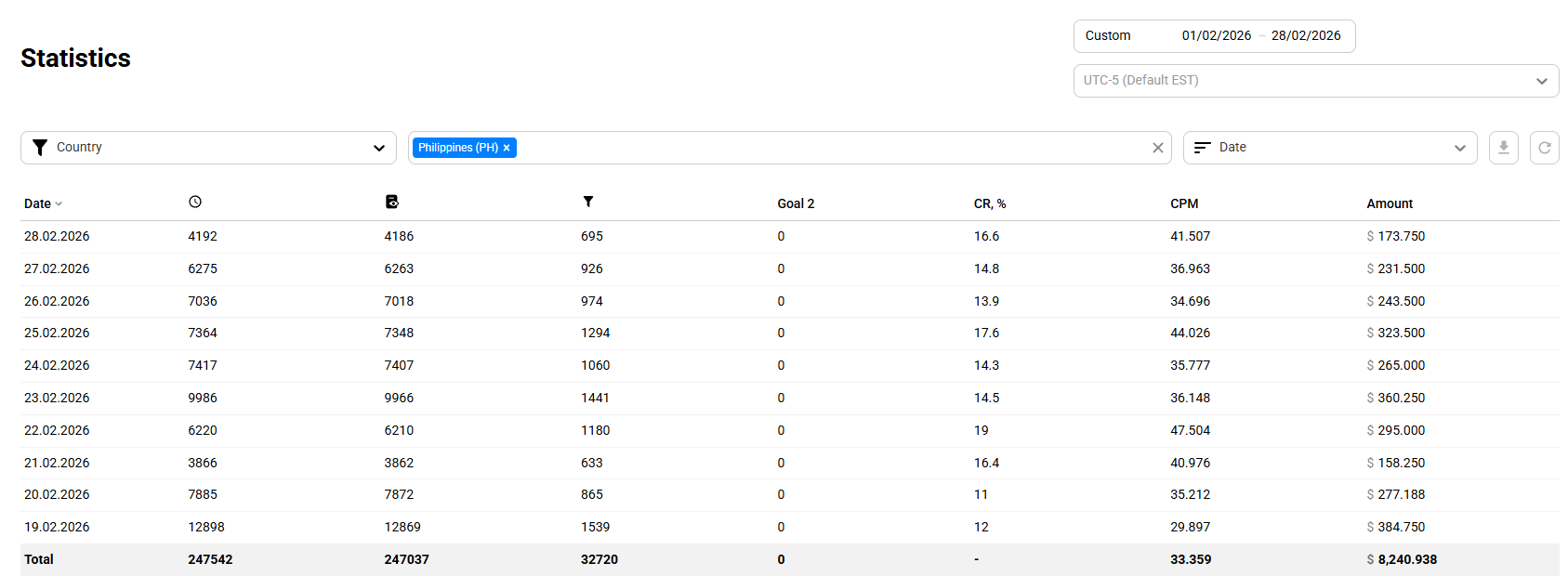
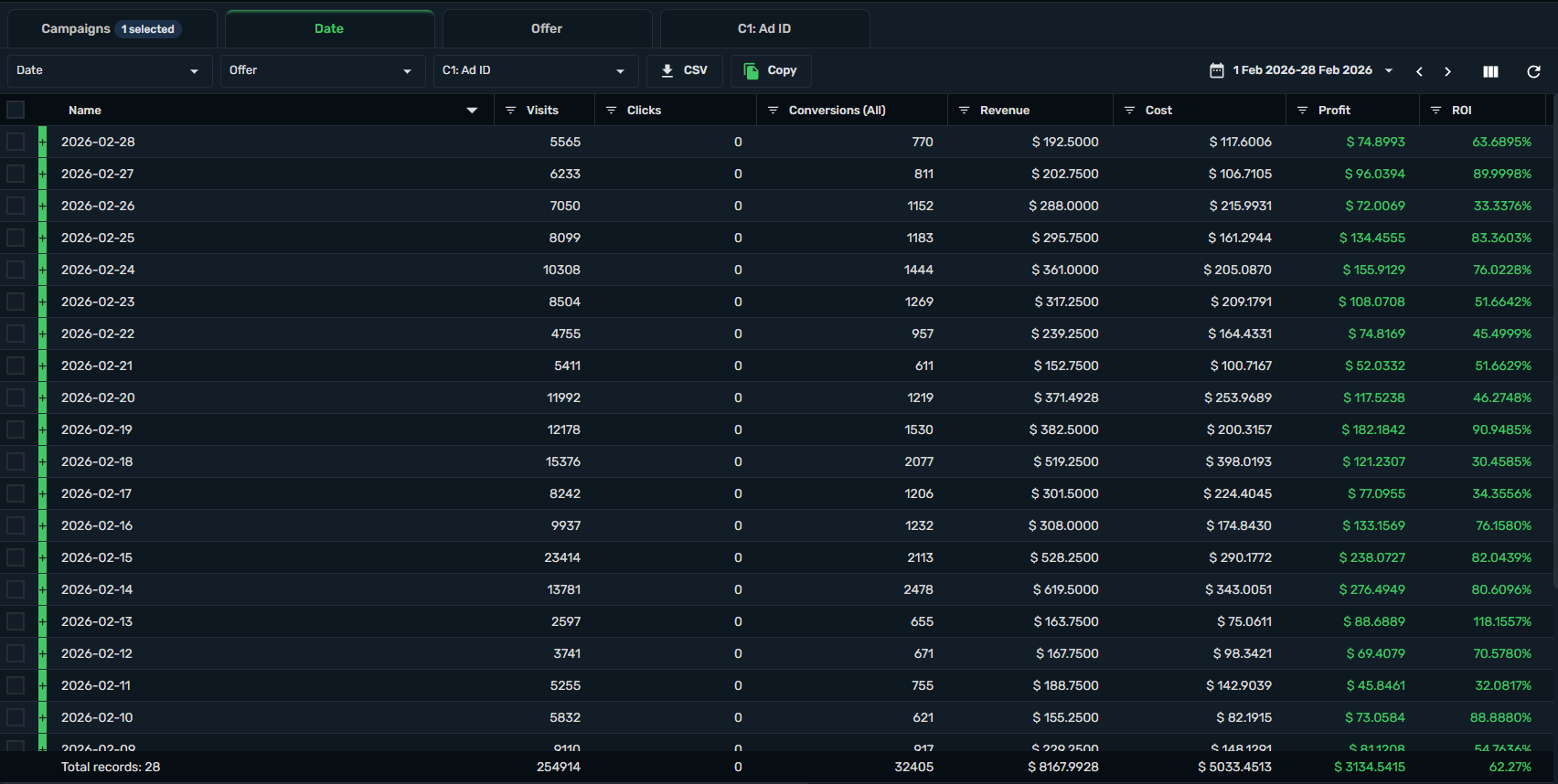
The majority of revenue was generated by just three Facebook campaigns – all of which have been running continuously for nearly five months.
This is highly unusual for Facebook campaigns. In many cases, affiliates face frequent interruptions due to creative fatigue, moderation issues, or account restrictions, forcing them into a cycle of constant relaunches.
In this case, however, the campaigns continued running because they were built with a different approach from the start.
Asset Thinking vs. Short-Term Thinking
In the past, many affiliates used strong, attention-grabbing creatives for Interactive offers. This often helped get high CTR and quick results.
But for long-term success, it’s important to keep campaigns clear and consistent. Simple messaging and a clear value usually work better over time.
At the same time, Facebook’s moderation has become stricter. It now checks not only text, but also visuals and the overall message. This became especially noticeable after the March 2026 update, when many ad accounts and campaigns were restricted as part of these changes.
For many affiliates, this meant losing accumulated data and stable income overnight.
What Makes an Ad a Long-Term Asset
Once you shift from quick wins to long-term results, your creative strategy also changes.
The main idea is simple: play by the rules and focus on real engagement.
If your campaign is compliant, the platform is more likely to keep delivering traffic over time.
Instead of pushing aggressive promises, the focus moves to getting users genuinely interested.
What changes in practice:
- Don’t force clicks — build interest. Clickbait might bring quick traffic, but it doesn’t last. Ads that actually engage users show more stability.
- Engagement matters more. When users like, comment, or share, it helps performance and scaling.
- Use clear messaging. Keep your messaging simple, and encourage users to interact.
- Leverage curiosity. Don’t reveal everything upfront — a bit of mystery drives clicks and engagement.
As the publisher explains, the core of his approach is built around interactive mechanics, but he prefers not to disclose the exact creatives, as he is still running this campaign.
Still, the idea is clear. His concepts match how Interactive offers work: they spark curiosity, encourage users to participate, and create natural engagement.
And most importantly, this approach is more sustainable for long-term scaling.
At the same time, not all concepts are universal:
“Some creatives work very well in Southeast Asia, but in other regions like Africa or Latin America, different cultural elements perform better. The right approach always comes from testing.”
This highlights the importance of localization, which involves adapting visuals and messaging to the cultural context of the target audience.
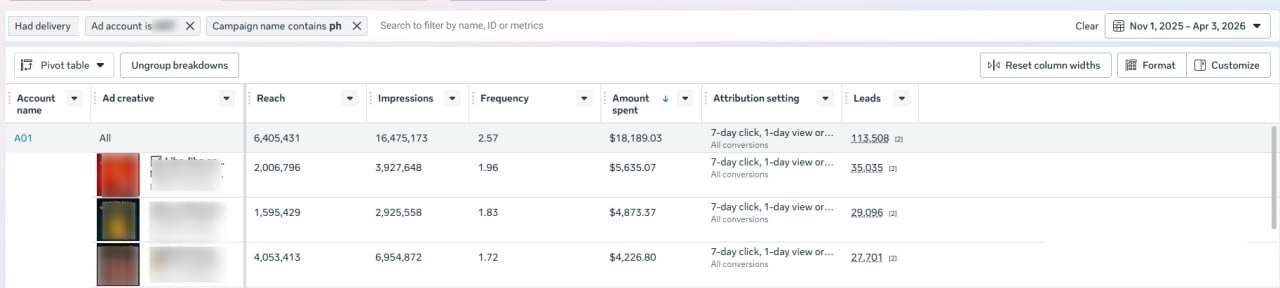
The screenshot above shows the performance of the key creatives over their full lifetime: from November 2025 to early April 2026.
We asked the publisher for this data to see how the campaigns perform long-term. The initial results only covered February, but the campaigns had been running profitably for several months.
The data shows that just a few creatives generated most of the leads and spend over time. This supports the idea of treating campaigns as long-term assets, not just short-term tests.
The publisher also noted a discrepancy in tracking:
Possibly due to technical reasons, the number of leads reported by Facebook is around 10,000 lower than the actual figure.
How Creatives Are Built
The creative process is based on research, AI, and constant testing.
Before launching, he looks at existing ads using Meta Ad Library and other tools. The goal is to find creatives that have been running for a long time — a strong sign they work.
AI helps generate ideas like angles, hooks, and interaction mechanics. But everything is then refined manually and adjusted to the target audience.
Once campaigns are live, decisions are based on real data. User behavior, engagement, and conversions show what works.
Over time, this builds a unique creative approach that’s hard to replicate without the same data.
From Testing to Scaling
During testing, multiple creatives are launched with controlled budgets. While CTR is monitored, the primary focus is on engagement quality, especially user comments and organic interaction.
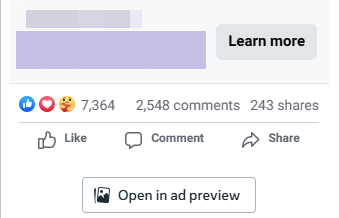
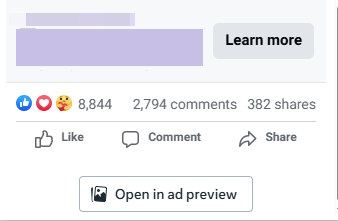
“When users start interacting naturally – not just clicking – that’s usually the first sign of long-term potential.”
Once a strong creative is identified, the strategy shifts toward consolidation.
Instead of distributing the budget across multiple campaigns, Bin focused on scaling the most promising one. Running multiple ad sets using the same post allows engagement to accumulate, strengthening social proof and improving delivery.
At the same time, scaling tools such as Cost Cap and Bid Cap help maintain efficiency while increasing volume. Lookalike audiences further expand reach by identifying new users similar to existing converters.
The result is a compounding effect: as engagement grows, relevance increases, CPM decreases, and performance stabilizes.
At this stage, the campaign evolves beyond just an ad – it becomes a long-term asset within the platform ecosystem.
Final Thoughts: Playing the Long Game
Affiliate marketing has long been associated with short-term wins and aggressive tactics. However, as platform policies evolve, this approach becomes increasingly fragile.
The alternative is to build for longevity.
“Every compliant campaign adds value: to your account, your creatives, and your overall strategy.”
Unlike short-term tactics, these campaigns do not disappear with the next platform update. Instead, they become a sustainable competitive advantage.
Zeydoo’s ecosystem, particularly its interactive offers, combined with Facebook’s algorithm, creates a strong foundation for this approach.
For affiliates looking to move beyond constant resets and build something scalable, this model offers a clear direction.
👉 https://app.zeydoo.com/offers/22839
👉https://app.zeydoo.com/offers/19037
👉https://app.zeydoo.com/offers/top/20418
Long-term assets are not built overnight, but they compound over time.